Why the Humble Business Card Still Matters in 2026
Despite rapid advancements in technology, one networking tool has remained a constant in the business world: the business card. For decades, it has served as a quick introduction, a symbol of professionalism, and a gateway to future opportunities.
Whether exchanged during a formal meeting or at a networking event, a business card often represents the first step toward building a valuable relationship.
However, the way professionals connect has changed dramatically. Business is no longer confined to office buildings or conference halls. Meetings happen over video calls, collaborations span continents, and networking often begins online before people ever meet in person. In this environment, professionals need a smarter way to share their identity and stay connected.
Meetings happen over video calls, collaborations span continents, and networking often begins online before people ever meet in person. In this environment, professionals need a smarter way to share their identity and stay connected.
That shift has led to the rise of digital business cards—a modern alternative that combines convenience, flexibility, and technology to create better networking experiences.
Paper business cards have served generations of professionals well, but they come with inherent limitations that make them increasingly impractical in today's fast-paced business landscape.
Every printed card contains static information. If your phone number changes, you receive a promotion, move offices, or update your website, every card you've already distributed instantly becomes outdated. Reprinting hundreds or thousands of cards every time details change creates unnecessary costs and administrative effort.
Storage is another challenge. Business cards are often misplaced, forgotten in wallets, or left behind after conferences. Even when recipients keep them, many never transfer the information into their digital contacts, causing promising business opportunities to fade away.
Paper cards also offer limited space. Beyond basic contact details, there is little room to communicate expertise, showcase achievements, or direct prospects toward valuable online resources. In an era where buyers research businesses digitally before making decisions, this limitation can reduce the impact of an otherwise promising introduction.
Modern networking extends far beyond exchanging names and phone numbers. Today's professionals build credibility through websites, portfolios, social media profiles, online reviews, videos, and digital content.
When someone expresses interest after a meeting, they often want immediate access to additional information. They may wish to visit a company website, browse services, connect on LinkedIn, schedule a meeting, or review previous work—all within seconds.
Traditional business cards cannot deliver this interactive experience. Instead, recipients must manually search for information, increasing the chances that the connection is delayed or forgotten altogether.
Digital business cards eliminate these barriers by allowing professionals to provide comprehensive, instantly accessible profiles that integrate seamlessly with modern communication habits.
Organizations across industries are embracing digital transformation to improve efficiency and customer experience. Networking is naturally following the same path.
Digital business cards reduce printing expenses, eliminate inventory management, and allow companies to maintain up-to-date employee information without constant redesigns or reorders. This is especially valuable for growing businesses where teams expand quickly or personnel changes occur frequently.
For enterprises with sales representatives, consultants, recruiters, or customer-facing employees, maintaining consistent branding becomes much easier through standardized digital profiles.
The benefits also extend beyond cost savings. Digital business cards simplify information sharing during virtual meetings, webinars, trade shows, and international collaborations where physical cards may not be practical. They help businesses remain agile while presenting a modern, technology-forward image to clients and partners.
The adoption of digital business cards has moved well beyond early adopters. Today, companies across virtually every sector are standardising on digital cards, and the use cases span every function.
First impressions influence business decisions more than many organizations realize. A memorable introduction increases the likelihood of follow-up conversations, referrals, and long-term partnerships.
A digital business card creates a richer first impression by offering more than just contact details. It allows professionals to present a complete digital identity that reflects their expertise, achievements, and personality.
Hospitality leverages digital cards to project the premium image their guests expect. The Leela Hotels, for instance, uses digital business cards that reflect their brand's elegance while enabling seamless guest follow-up from a single QR scan.
Real Estate and Infrastructure professionals, including teams from K Raheja Corp, rely on digital cards for site visits, broker meetings, and client presentations, environments where leaving an accurate, always-current point of contact is critical.
Instead of simply receiving a phone number and email address, prospects can instantly access company websites, service pages, portfolios, testimonials, booking links, social media channels, and other resources that reinforce credibility.
This immediate access shortens the journey from introduction to engagement and helps transform casual meetings into meaningful business relationships.
The rise of hybrid workplaces and remote collaboration has accelerated the adoption of digital networking tools. Employees frequently interact with clients and colleagues across cities or countries without ever exchanging physical materials.
In these situations, sending a printed business card is often impractical or impossible. Digital business cards solve this challenge by making professional information available instantly through QR codes or shareable links.
Whether attending a virtual conference, participating in an online sales presentation, or networking after a webinar, professionals can exchange information effortlessly without relying on postal services or printed materials.
This flexibility ensures that networking remains effective regardless of where business conversations take place.
Environmental responsibility is no longer limited to manufacturing or supply chains. Companies increasingly evaluate every aspect of their operations through the lens of sustainability, including marketing and networking practices.
Traditional business cards consume paper, ink, transportation resources, and repeated print runs whenever information changes. Many of these cards ultimately end up discarded after brief use.
Digital alternatives reduce this waste significantly while supporting environmentally conscious initiatives. By replacing stacks of printed cards with a single digital profile, businesses demonstrate their commitment to modern and sustainable practices without sacrificing professionalism.
For organizations pursuing ESG objectives or reducing unnecessary operational expenses, digital business cards represent a simple but meaningful improvement.
One of the greatest strengths of digital business cards is their ability to turn a simple exchange into an interactive experience.
Rather than ending the interaction with a printed rectangle, recipients can immediately explore additional information that strengthens the relationship. They might watch an introduction video, browse products, view case studies, connect through multiple platforms, or schedule a meeting within minutes.
This richer engagement encourages continued interaction and keeps conversations moving forward naturally.
The result is not just contact sharing but relationship building—a critical distinction in competitive markets where trust and accessibility often influence purchasing decisions.
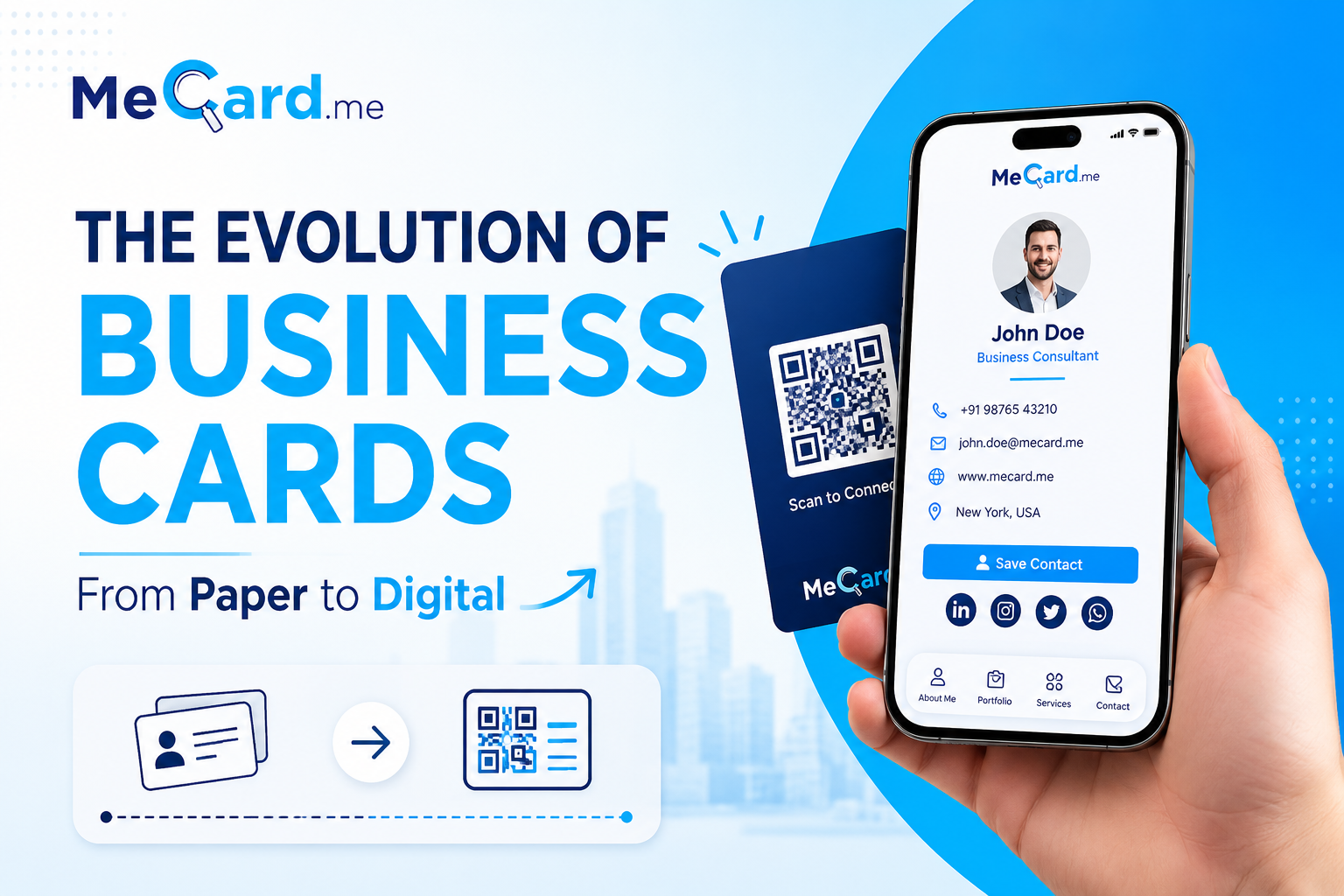
As businesses seek smarter networking solutions,Mecard.me offers a practical way to replace outdated paper cards with dynamic digital identities.
Instead of printing hundreds of cards, professionals can create a digital profile that is easy to share and simple to maintain. Contact information, websites, portfolios, and social profiles can all be kept current without reprinting or redistributing materials.
This means recipients always receive the latest information, reducing confusion and improving communication.
MeCard also supports stronger personal branding by allowing users to present more than just basic contact details. A single profile can become a central hub for showcasing expertise, directing visitors to important resources, and encouraging meaningful follow-up.
Whether used by entrepreneurs, consultants, executives, sales professionals, or growing enterprises, MeCard helps make every interaction more efficient and impactful.
Although digital business cards are valuable for almost every profession, certain industries benefit particularly from their flexibility.
Sales teams can share product information and meeting links immediately after introductions.Consultants can direct prospects to portfolios and service offerings without sending multiple emails. Real estate professionals can provide property listings alongside Sales teams can share product information and meeting links immediately after introductions.Consultants can direct prospects to portfolios and service offerings without sending multiple emails. Real estate professionals can provide property listings alongside contact details, while recruiters can simplify candidate communication through centralized digital profiles.
Startup founders attending investor events, healthcare professionals participating in conferences, freelancers meeting potential clients, and corporate executives representing global organizations can all benefit from having instantly accessible and continuously updated contact information.
The ability to adapt information in real time makes digital business cards especially valuable in industries where relationships and responsiveness drive success.
Technology continues to reshape how people communicate, collaborate, and conduct business. Artificial intelligence, automation, contactless interactions, and mobile-first experiences are becoming standard expectations rather than competitive advantages.
Business cards are evolving alongside these changes.
The future of networking is likely to involve even deeper integrations with customer relationship management systems, appointment scheduling tools, analytics platforms, and personalized digital experiences. Rather than serving as static pieces of paper, business cards will continue evolving into living professional profiles that support ongoing engagement.
Organizations that adopt digital networking solutions today position themselves to respond more quickly to opportunities while presenting an image of innovation and adaptability.
The business card has not disappeared—it has evolved.
While paper cards played an important role for generations, today's professionals require networking tools that match the speed and flexibility of the digital economy. Instant updates, richer information sharing, seamless virtual networking, and sustainable practices are redefining what an effective business card should accomplish.
Digital business card meet these expectations by transforming a simple exchange of contact information into an engaging, interactive experience that supports stronger professional relationships.
MeCard embraces this evolution by helping individuals and organizations connect more intelligently, present themselves more effectively, and ensure every networking opportunity has the potential to grow into something meaningful
As business continues to become more connected and technology-driven, the transition from paper to digital is no longer a trend—it's the future of professional networking.
Phone: +91 77770 01366 / +91 77770 01369
Email: contact@mecard.me
Website: www.mecard.me