The New Workplace Runs on Digital First Impressions
Imagine meeting a potential client, partner, investor, or employer today.
Before they remember your handshake, they search your name.
Before they save your phone number, they look at your LinkedIn profile. Before they decide to work with you, they evaluate your digital presence.This shift has fundamentally changed how professionals build trust, establish credibility, and create opportunities.In the modern workplace, your digital identity is no longer an extension of your professional persona it is your professional persona.Whether you're a business owner, sales executive, consultant, HR leader, entrepreneur, or corporate employee, the way you present yourself digitally directly influences how people perceive your expertise, reliability, and value.
Organizations are investing heavily in digital transformation, remote collaboration, hybrid work models, and virtual networking. Yet many professionals still overlook one critical asset: their digital identity. The reality is simple.Your opportunities increasingly depend on how effectively you manage, present, and share your professional identity online.
Over the last decade, workplaces have undergone a dramatic transformation.Remote work, virtual meetings, digital collaboration platforms, and online networking have become standard business practices.
A professional relationship that once started with an office visit or conference introduction now often begins through:
According to multiple workplace studies, professionals often form opinions about a person within seconds of viewing their online profile or digital presence.
This means your digital identity has become the first touchpoint in most professional interactions.
The question is no longer whether people will look you up online.
The question is what they will find when they do.
Digital identity refers to the collection of information, profiles, credentials, and professional assets that represent you online.
It includes:
Together, these elements create a professional narrative that helps others understand who you are and what value you bring.
A strong digital identity communicates professionalism, accessibility, expertise, and trustworthiness.
A fragmented or outdated identity creates confusion and missed opportunities.
In traditional workplaces, first impressions were largely formed in person.
Today, most professional interactions begin digitally.Most enterprises measure ROI for major digital transformation initiatives.
Consider a few common scenarios:
Consider a few common scenarios:
In each case, the individual is likely to search for additional information before engaging further.
If they encounter outdated contact details, incomplete profiles, broken links, or inconsistent branding, trust begins to erode immediately.
Conversely, a well-structured digital identity creates confidence.
People feel more comfortable engaging with professionals who appear organized, transparent, and credible online.
Trust is increasingly established before the first conversation even occurs.
Many professionals think digital identity is simply about visibility.
In reality, it directly impacts business outcomes.
Better Networking Opportunities
Once a paper card is handed over, the organization loses complete visibility.
Professional networking has become increasingly digital.
Industry events, conferences, webinars, and virtual meetings often rely on digital exchanges instead of traditional paper business cards.
A modern digital identity allows professionals to instantly share:
This reduces friction and helps relationships continue beyond the initial interaction.
Faster Relationship Building
Trust is a major factor in business decisions.
When prospects can quickly verify your background, expertise, and professional accomplishments, they are more likely to engage.
A complete digital identity accelerates credibility.
Instead of spending valuable time explaining who you are, your digital presence does much of the work for you.
Increased Professional Visibility
Opportunities often come from being discoverable.
Professionals with strong digital identities are easier to find, evaluate, and contact.
This visibility can lead to:
In competitive industries, visibility often becomes a differentiator.
Enhanced Personal Branding
Your personal brand is the perception people have about you professionally.
Digital identity serves as the foundation of that brand.
Consistent messaging, professional presentation, and accessible information help reinforce your expertise and authority.
Strong brands create stronger opportunities.
Despite advances in technology, many professionals still rely on outdated networking methods.
Traditional paper business cards present several challenges:
Information Gets Lost
Business cards are frequently misplaced, forgotten, or discarded.
Even when retained, they often sit unused in drawers or card holders.
Information Becomes Outdated
Limited Engagement
No Analytics
The evolution from paper cards to digital business cards represents more than convenience.
It reflects a broader shift toward connected professional ecosystems.
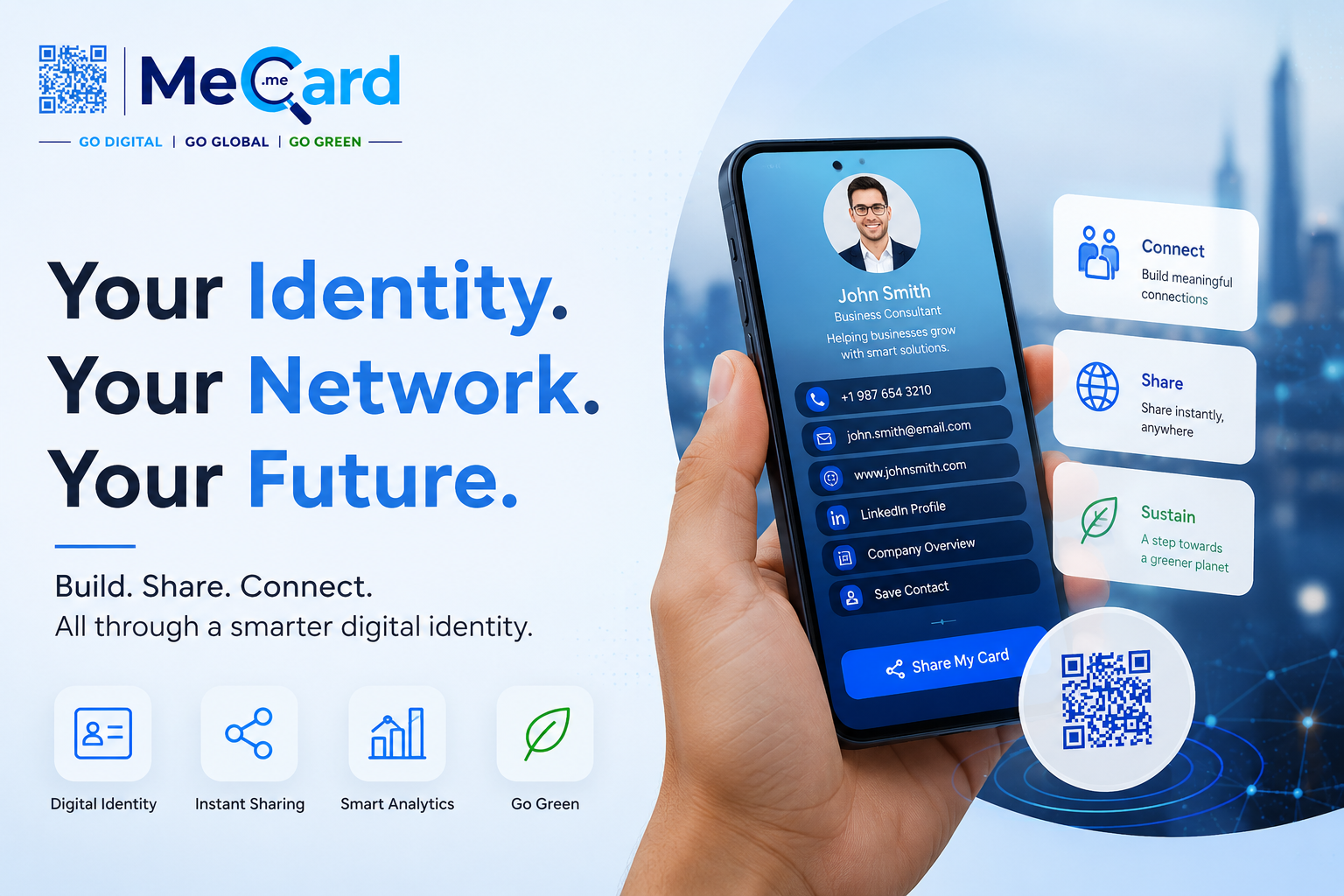
Modern solutions such as Mecard.me enable professionals to create dynamic digital identities that can be shared instantly through QR codes, NFC technology, links, or mobile devices
Instead of handing someone a static piece of paper, professionals can provide a complete digital profile that remains updated in real time.
Benefits include:
As workplaces become increasingly digital, these capabilities are becoming essential rather than optional.
Remote and hybrid work environments have made digital identity even more important.
Employees often collaborate with colleagues, clients, and stakeholders they may never meet in person.
Without physical interactions, digital presence becomes the primary method of establishing credibility and connection.
A well-managed digital identity helps remote professionals:
In many ways, digital identity serves as the virtual equivalent of a professional reputation.
Digital identity is not just about visibility.
It is also about authenticity.
In today's environment, organizations increasingly face challenges related to impersonation, misinformation, and fraudulent communications.
Professionals who maintain verified, consistent digital identities help reduce uncertainty and improve trust.
A centralized professional profile ensures that colleagues, customers, and partners can confidently access accurate information.
This becomes particularly important for:
Trust remains one of the most valuable assets in business.
Digital identity helps protect and strengthen that trust.
Several workplace trends suggest that digital identity will continue growing in importance:
These include:
AI-Driven Recruitment
Recruiters increasingly use digital platforms and online profiles to evaluate candidates before interviews.
Virtual Events
Conferences and networking events are rapidly adopting digital-first engagement models.
Hybrid Work Environments
Employees need efficient ways to connect regardless of location.
Mobile-First Interactions
Professionals expect instant access to information from smartphones and digital devices.
Personal Branding Growth
Professionals are investing more heavily in building recognizable personal brands.
As these trends accelerate, managing a strong digital identity will become a competitive necessity.
Building a Strong Digital Identity
Creating an effective digital identity does not require complexity.
It requires consistency.
Professionals should focus on:
The goal is to make it easy for others to understand who you are, what you do, and how they can connect with you.
The simpler that experience becomes, the more opportunities you create.
The workplace has changed.
Professional relationships now begin online, trust is often established digitally, and opportunities increasingly depend on discoverability and accessibility.
Your digital identity has become one of your most valuable professional assets.
It influences first impressions, supports personal branding, strengthens credibility, and enables meaningful business connections.
As organizations continue embracing digital transformation, professionals who proactively manage their digital presence will be better positioned to grow their networks, enhance their reputation, and unlock new opportunities.
Platforms like Mecard.me represent the next evolution of professional networking by helping individuals create, manage, and share dynamic digital identities that align with the needs of the modern workplace.
In a world where every connection matters, your digital identity is no longer just part of your professional journey, it is the gateway to it.
Phone: +91 77770 01366 / +91 77770 01369
Email: contact@mecard.me
Website: www.mecard.me