
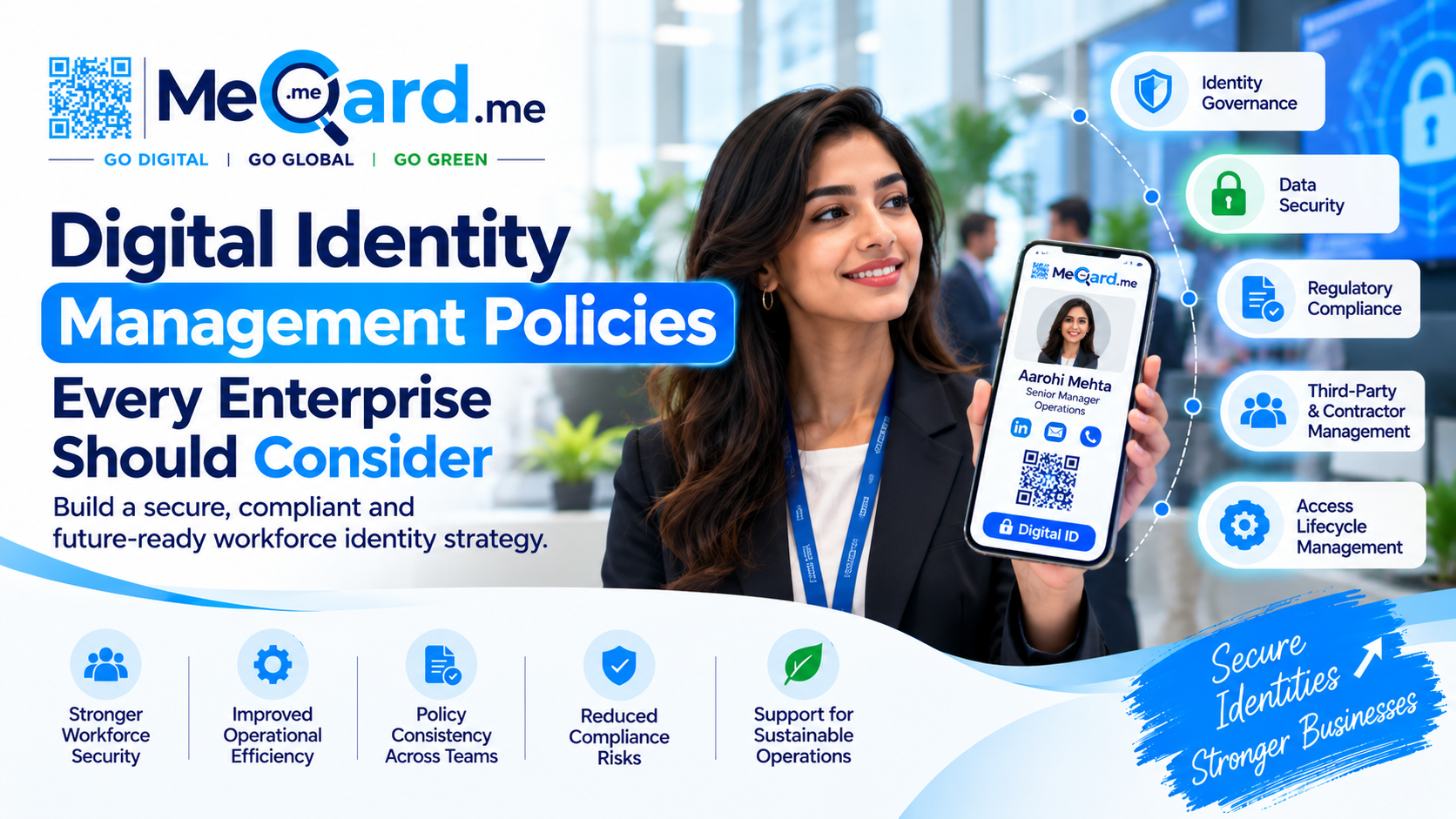
Introduction: Why Digital Identity Management Needs a Clear Policy
Every employee represents an organization in some way. Whether interacting with customers, accessing internal systems, visiting a client site, managing financial transactions, or representing the company at an industry event, employees rely on an identity that connects them to their organization.
But what happens when that identity is outdated, incorrectly assigned, shared without authorization, or not deactivated after an employee leaves?
For enterprises managing multiple departments, branches, contractors, vendors, and field teams, employee identity management can quickly become complicated. Physical ID cards, spreadsheets, email approvals, disconnected HR records, and manually updated business profiles may create inconsistencies that affect security, accountability, customer trust, and operational efficiency.
This is why digital identity management policies are becoming an important part of enterprise governance. These policies establish how identities are created, verified, updated, used, monitored, and deactivated throughout their lifecycle.
A digital identity management policy is not simply about deciding what information appears on an employee ID card. It defines the rules and responsibilities that help an organization maintain accurate, controlled, and verifiable identities.
With a structured policy and the right technology, enterprises can improve identity visibility, reduce administrative gaps, and create a more consistent approach to managing employee and business identities.
A digital identity management policy is a documented set of rules governing how an organization creates, maintains, verifies, protects, and retires digital identities.
These identities may include employee ID cards, digital business cards, contractor credentials, visitor passes, field-agent identities, and other digital profiles used to represent individuals within an organization.
The policy should clarify who can issue an identity, which information must be verified, who can modify records, how identity changes are approved, and what happens when an individual changes roles or leaves the organization.
Every organizational identity should be based on reliable and verified information.
Enterprises should establish a formal process for confirming an employee's identity and employment status before issuing a digital ID card or business profile. The process should identify the authoritative source of employee information, the team responsible for verification, and the approval required before an identity becomes active.
Why it matters: Verified employee identities help organizations establish accountability, improve customer confidence, and reduce the risk of incorrect or unauthorized representation.
Employee identities change throughout the employment lifecycle. A digital identity management policy should define how each transition—onboarding, activation, modification, validation, suspension, and deactivation—affects an individual's identity.
Why it matters: Lifecycle management reduces the possibility of former employees continuing to appear as authorized representatives and helps keep organizational identity records current.
Not every employee should have the same authority over identity information. An enterprise should define who can create digital identities, edit employee details, approve changes, issue cards, and deactivate identities.
Why it matters: Role-based permissions reduce unauthorized changes, clarify accountability, and support better governance across departments and branches.
Enterprises should define how frequently identity information is reviewed and which events (promotions, transfers, contact changes) require immediate updates to ensure accuracy.
Why it matters: Accurate identity records support professional communication, reduce administrative rework, and help customers verify who they are dealing with.
An enterprise should decide what information can be displayed publicly, what must remain restricted, and what should only be available to authorized users. The policy should address secure administration, data retention, and incident reporting.
Why it matters: Privacy-conscious identity management reduces unnecessary exposure of employee information and helps establish trust in digital identification processes.
QR-based identity verification makes it easier for stakeholders to access an employee's profile. Organizations need to define what the scan verifies, which information appears, and how active status is determined.
Why it matters: A defined QR verification process improves transparency and reduces reliance on easily outdated physical information.
Specify the sponsoring department, verification requirements, permitted activities, and validity period for non-permanent staff who represent the organization.
Why it matters: Clear rules for external personnel help organizations maintain oversight and reduce identity-management gaps across their extended workforce.
Define which actions require logging—such as identity creation, approval, and activation—who can review those records, and how long they should be retained.
Why it matters: Documented identity changes improve accountability and make it easier for authorized teams to review compliance with procedures.
Establish a defined response process for incorrect details, misused profiles, or suspicious QR codes, distinguishing routine corrections from security incidents.
Why it matters: A documented response process helps organizations address identity-related issues consistently instead of relying on informal intervention.
Organizations should assign a policy owner and conduct periodic reviews to ensure records remain accurate and permissions remain appropriate as the enterprise evolves.
Why it matters: Ongoing governance keeps identity management aligned with business operations rather than allowing outdated processes to accumulate.
MeCard.me offers solutions that include digital employee IDs, digital business cards, and centralized management to help organizations operationalize their policies:
Avoid treating a digital ID as a complete replacement for access management, collecting more info than necessary, or leaving deactivation to manual follow-ups. Most importantly, ensure the policy has a clear owner.
What is a digital identity management policy? It defines how an organization creates, verifies, protects, and retires digital identities.
Can digital identity management replace enterprise access control? No. Digital IDs support identification, but application logins and building access require their own controls.
How does MeCard.me help? It provides tools for centralized administration, real-time updates, and QR verification to support identity policies.
Digital identity management is part of how an enterprise protects its reputation and establishes accountability. Without clear policies, organizations face operational and security risks. MeCard.me helps bridge the gap between policy and practice with a reliable technology layer for managing organizational identity from onboarding to deactivation.
Secure workflows. Centralized control. Real-time accuracy.
Ready to establish a more organized and accountable approach to digital identity? Explore MeCard.me and discover how our enterprise solutions can support your organization's strategy.