
Every Business Introduction Is an Opportunity to Build a Relationship.
In B2B markets, customer acquisition rarely happens through a single interaction. It often begins with a conversation at a business meeting, an introduction at an industry event, a referral from a partner, or an exchange between sales representatives and potential clients.
What happens after that first interaction can influence whether the relationship progresses.
A prospect may want to understand the company's services, explore its website, review its solutions, connect with the representative professionally, or schedule a follow-up meeting. If accessing this information requires multiple searches, emails and manual exchanges, the initial momentum can fade.
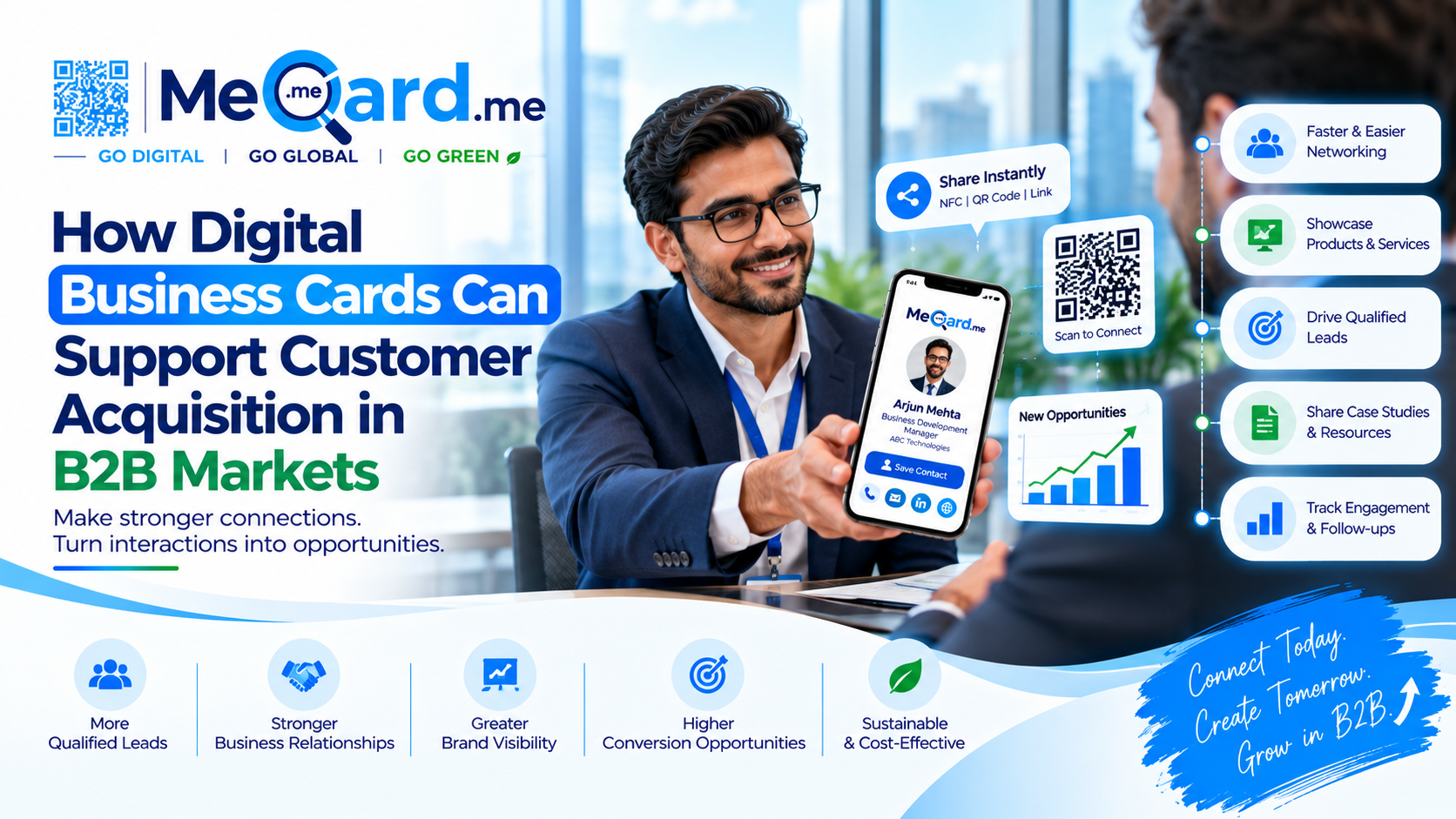
Digital business cards help bridge the gap by connecting professional identity with business websites, service information, contact channels and relevant online resources.
For B2B organizations, this creates an opportunity to make networking more actionable. Sales teams can share their details digitally, direct prospects to relevant business information and make follow-up easier. Platforms such as MeCard.me help organizations create and manage digital business cards that connect employee identity with online business resources.
B2B customer acquisition is the process of attracting, engaging and converting businesses into customers. Unlike many consumer purchases, B2B buying decisions can involve multiple stakeholders, longer evaluation periods, technical assessments, budget approvals and ongoing discussions.
A typical B2B acquisition journey may include:
While traditional cards are a staple, they have inherent limitations in a digital-first sales environment:
Instead of basic contact info, a representative provides a card that links to the company's website and service pages. This allows prospects to explore the offering long after the meeting ends.
Profiles can include enquiry links or appointment booking features. This reduces the effort required for a prospect to express formal interest or schedule a demo.
Sales reps can customize links based on the conversation—directing software prospects to a demo page, and consulting prospects to a portfolio or case study page.
Consistent branding and accurate employee info across a large sales team contribute to a professional brand experience that B2B buyers value.
QR-based sharing eliminates manual typing for the prospect. Sales reps can also include the digital card in follow-up messages to keep resources accessible.
Centralized management helps maintain consistent business information even as sales organizations grow across different regions or product divisions.
Analytics on profile views and link clicks help businesses identify which resources are most valuable to their prospects, allowing for sales process optimization.
Businesses should distinguish between card usage and actual acquisition results. Useful indicators include:
They connect professional introductions with company websites, service pages, and enquiry channels, making it easier for prospects to take the next step.
They make lead capture channels easier to access, but actual generation depends on the relevance of the offering and the follow-up process.
They allow instant access to a digital profile through a scan, which is ideal for high-volume networking environments like conferences.
Customer acquisition in B2B markets depends on building credibility and sharing relevant information. Digital business cards serve as a practical entry point into a connected B2B customer journey by linking offline networking with online business discovery.
However, digital cards are not a substitute for a complete strategy. Businesses still need personalized communication, effective lead qualification, and reliable performance measurement.
Digital Identity. QR Sharing. Enterprise Management. Analytics.
MeCard.me helps B2B organizations connect employee identity with customer-facing digital resources to support wider customer acquisition goals.