Bridge the gap between introducing a business contact and helping them take the next step.
When professionals exchange contact details, the conversation often begins with a business card. But in today's connected business environment, a name, designation, phone number and email address may not be enough to communicate the full value of a person or organization.
Customers may want to visit a company's website, explore its services, review a professional's credentials, connect on LinkedIn, view a product catalogue or schedule a meeting. If these details are spread across different platforms, people must search for them individually.
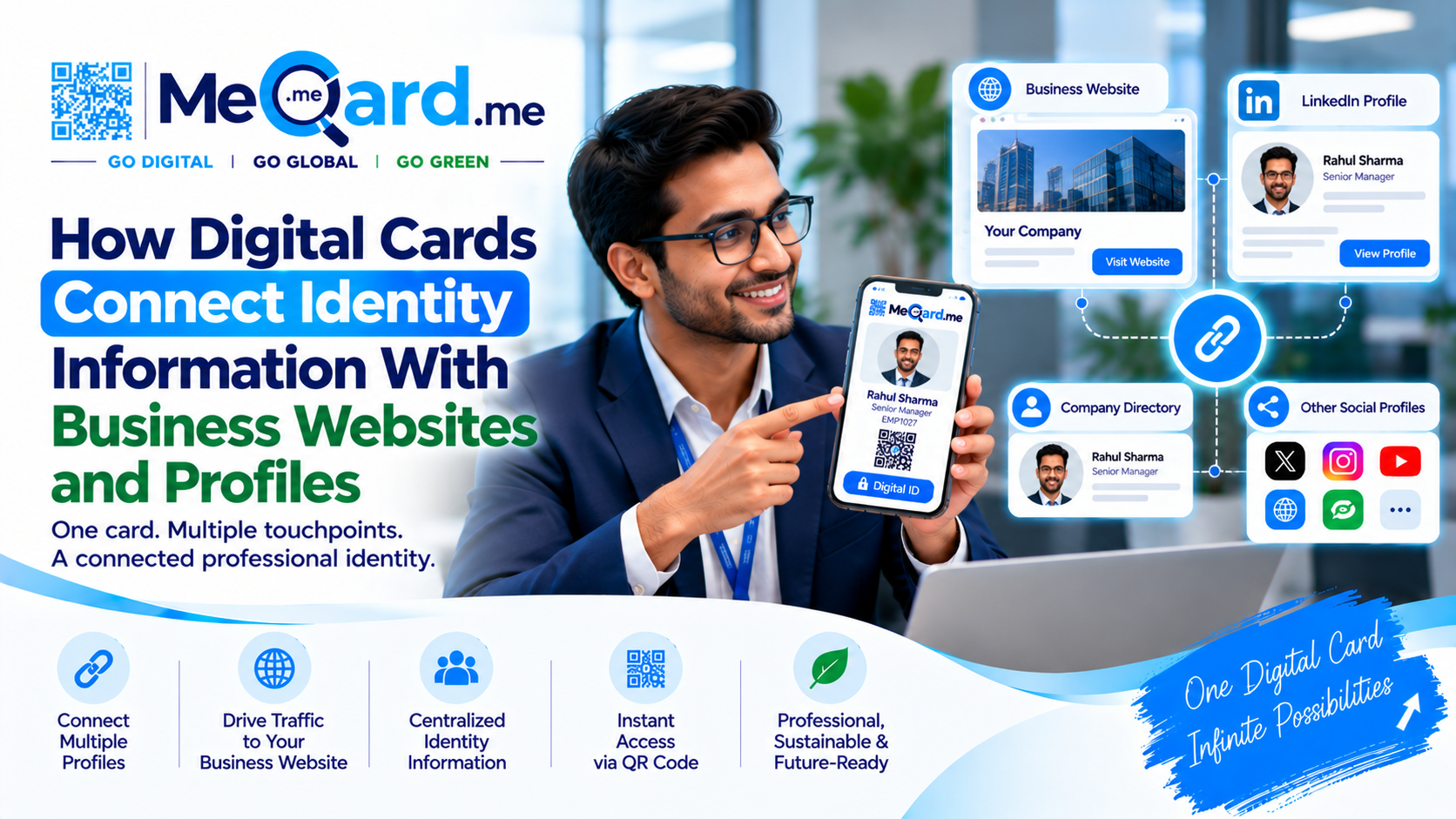
Digital business cards help bridge this gap by connecting professional identity information with relevant online destinations. Instead of sharing only basic contact details, professionals can provide a digital profile that brings together approved business information, website links, social profiles and other useful resources.
Platforms such as MeCard.me make it possible to combine digital identity and business contact information in a shareable digital profile.
For enterprises, this capability has value beyond networking. It can help standardize employee profiles, strengthen brand consistency, make business information easier to access and support more connected customer interactions.
A digital business card is an electronic professional profile that allows an individual to share contact information and relevant business details through a digital channel.
Unlike a traditional printed card, a digital business card can connect users directly to online resources. A recipient may open a company website, view a professional profile, access a product catalogue or save contact information without manually typing each detail.
Digital business cards can be shared through:
For enterprises, they can also serve as a standardized digital representation of employees, allowing organizations to maintain consistent branding while providing employees with a convenient way to share professional information.
A professional's identity often exists across multiple digital destinations. Their contact details may be stored in an address book, their company information on a corporate website, their professional history on LinkedIn, and their service information on a separate business page.
A digital business card brings selected details together within one accessible profile. For example, a sales executive's digital card could include their name, designation, business phone number, company website, LinkedIn profile and a link to the organization's product catalogue.
A digital business card can include a direct website link, making it easier for recipients to move from a professional introduction to the company's online presence. The recipient can then explore the company's offerings without searching for the correct website separately.
Digital business cards can connect these destinations through approved profile links. For example, an employee's digital card may include a LinkedIn profile, while the corporate website and official social media channels provide broader information about the organization.
Digital business cards can bring relevant resources together through direct links, depending on the platform's features:
With a digital business card, recipients may be able to save contact details, open a website, send an email or initiate a call through supported links and device features. This reduces the effort required to transfer information from a physical card into a phone's contact list.
Digital business cards can reduce the problem of outdated printed cards by allowing authorized users or administrators to update supported profile information without reprinting physical cards.
QR Codes: Scan to Access a Digital Profile
A QR code can connect a user to a digital business card through a compatible smartphone camera. They are useful in meetings, conferences, printed materials, email signatures, and presentations.
NFC: Share Through a Compatible Tap Experience
NFC-enabled sharing allows compatible devices or NFC cards to initiate access to a digital profile through a tap. This can be convenient during in-person networking.
Digital business cards can contribute to a company's digital presence by making official websites and professional profiles easier to access. However, its value is primarily indirect:
For organizations that want to make professional information more accessible, MeCard.me offers:
1. How do digital business cards connect identity information with websites?
They include direct links to company websites, social media, and other resources within a single digital profile.
2. Can a digital business card include multiple links?
Yes, depending on the configuration, you can include links to websites, product pages, portfolios, and booking pages.
3. How do QR codes help share digital business cards?
A QR code provides quick access to the digital card when scanned, opening the profile in a browser.
4. Do digital business cards improve SEO rankings?
Not automatically; they provide better accessibility and sharing, which indirectly supports discovery.
5. Can enterprises manage employee cards centrally?
Yes, platforms like MeCard offer enterprise administration features for centralized control.
6. Can information be updated after sharing?
Yes, supported profile information can be updated digitally, and recipients will see the latest version when they access the profile.
In a connected business environment, a professional introduction should do more than exchange names and phone numbers. It should make it easy for customers, partners and colleagues to discover relevant business information and take the next step.
By connecting professional identity with useful online resources, MeCard can help enterprises create more convenient networking experiences and maintain a consistent digital representation of their workforce.
Modernize your networking. Strengthen your brand.
Explore MeCard.me Digital Business Cards and discover how your organization can modernize professional networking.