Growth creates an identity management challenge that many businesses overlook.
As an organization grows, its workforce becomes more complex. New branches open, departments expand, employees move between roles, and contractors or field representatives join the operational ecosystem. While this growth creates new opportunities, it also introduces a challenge: maintaining a consistent employee identity across the organization.
One branch may use a different employee ID card format from another. Some departments may update employee information immediately, while others continue using outdated records. New hires may wait for physical ID cards, and employees who change designations may continue presenting credentials that no longer reflect their current roles.
Standardizing employee identity is about ensuring that every authorized individual is represented accurately, consistently, and according to the organization's policies.
For growing enterprises, this requires more than a common ID card design. It involves standardized employee information, defined approval processes, centralized administration, controlled updates, and a reliable approach to managing identities throughout the employee lifecycle.
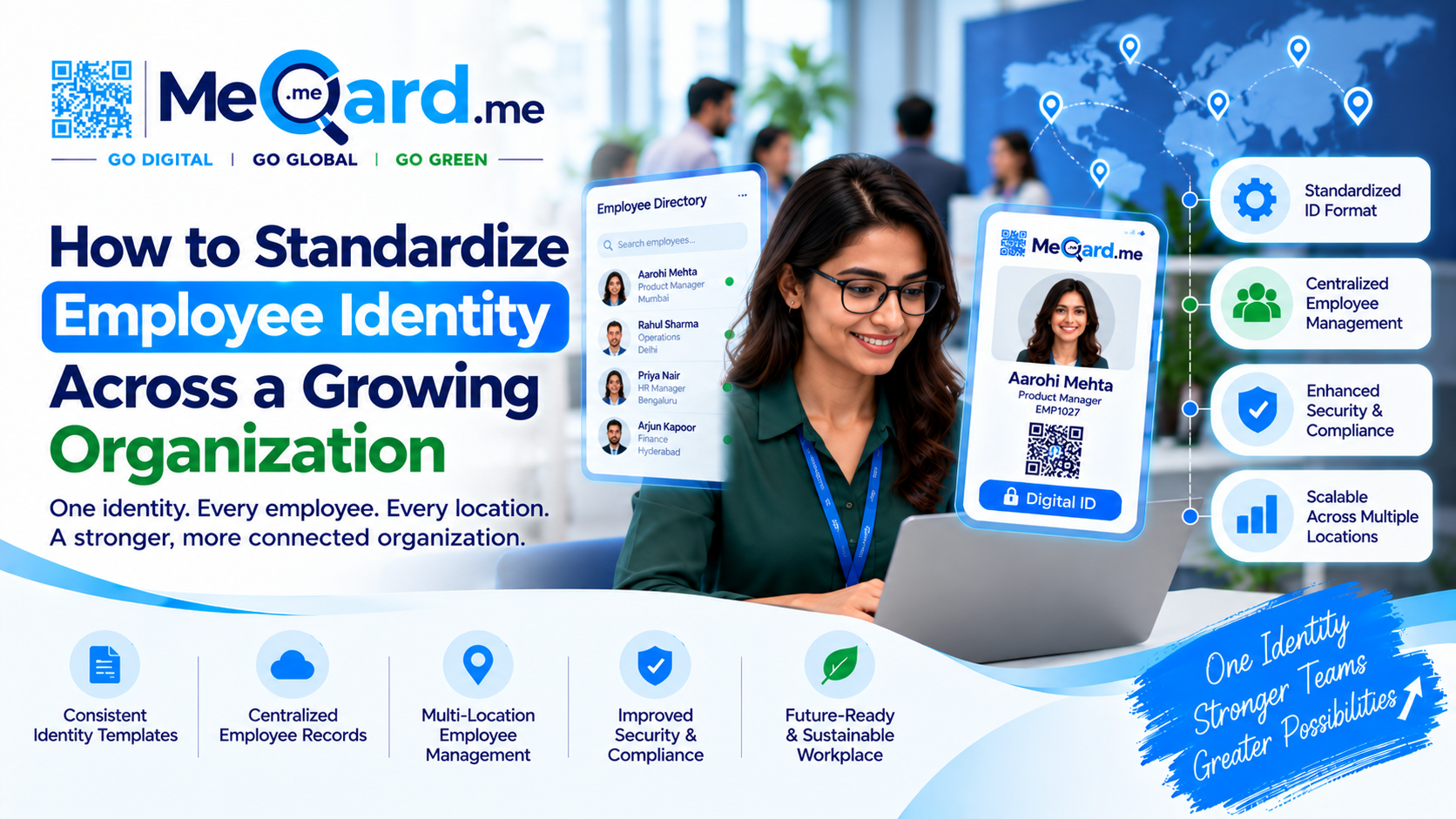
Digital employee ID solutions such as MeCard.me can help organizations establish this consistency by supporting centralized digital card management, QR-enabled identity profiles, and updates to approved employee information.
Employee identity standardization is the process of establishing consistent rules for how employees are identified, represented, verified, and managed across an organization. It covers both the information displayed on an employee's identity profile and the processes used to create and maintain that profile.
Standardization does not mean every employee must have identical permissions or display exactly the same information. Instead, it means that differences should follow approved organizational rules rather than inconsistent local practices.
One branch might use an older logo, another may include different employee fields, and a third may maintain its own employee ID spreadsheet. A standardized framework establishes approved templates and common procedures that can be followed across the organization.
When identity records are managed independently, one record may be updated while another remains unchanged. Standardized processes define which system owns the information and how updates should be reflected in identity profiles.
Inconsistent or outdated identification can create confusion during customer meetings or field visits. Consistent digital identity profiles reinforce the organization's professional image.
Standardized digital identity workflows can simplify the hiring process by defining how employee information is verified and which template is used, reducing dependence on physical printing and delivery.
Enterprises need to know who is authorized to create identities and modify official information. Standardized policies help establish responsibilities, permissions, and deactivation requirements.
Growing organizations experience frequent changes. A standardized identity lifecycle ensures that transfers or exits trigger appropriate reviews and deactivations of digital credentials.
MeCard.me offers digital identity solutions designed for growing organizations:
It means establishing consistent rules for information, templates, verification, and updates across an organization.
Yes. A digital platform like MeCard provides centralized administration for teams regardless of their location.
Authorized administrators can update digital profile fields instantly, ensuring information remains accurate without reprinting physical cards.
As organizations expand, the goal is not simply to give every employee an ID card with the same design. It is to create a reliable, scalable process for managing organizational identity. Standardization addresses the challenges of growth by establishing clear responsibilities and consistent procedures.
MeCard.me helps organizations put these standards into practice, providing the tools needed to centralize administration and simplify identity management as the workforce grows.
Explore MeCard.me Digital ID Solutions and discover how digital identity management can support a more consistent and scalable workforce.
Our platform helps enterprises centralize administration, support QR-based verification, and maintain current employee information with ease.