
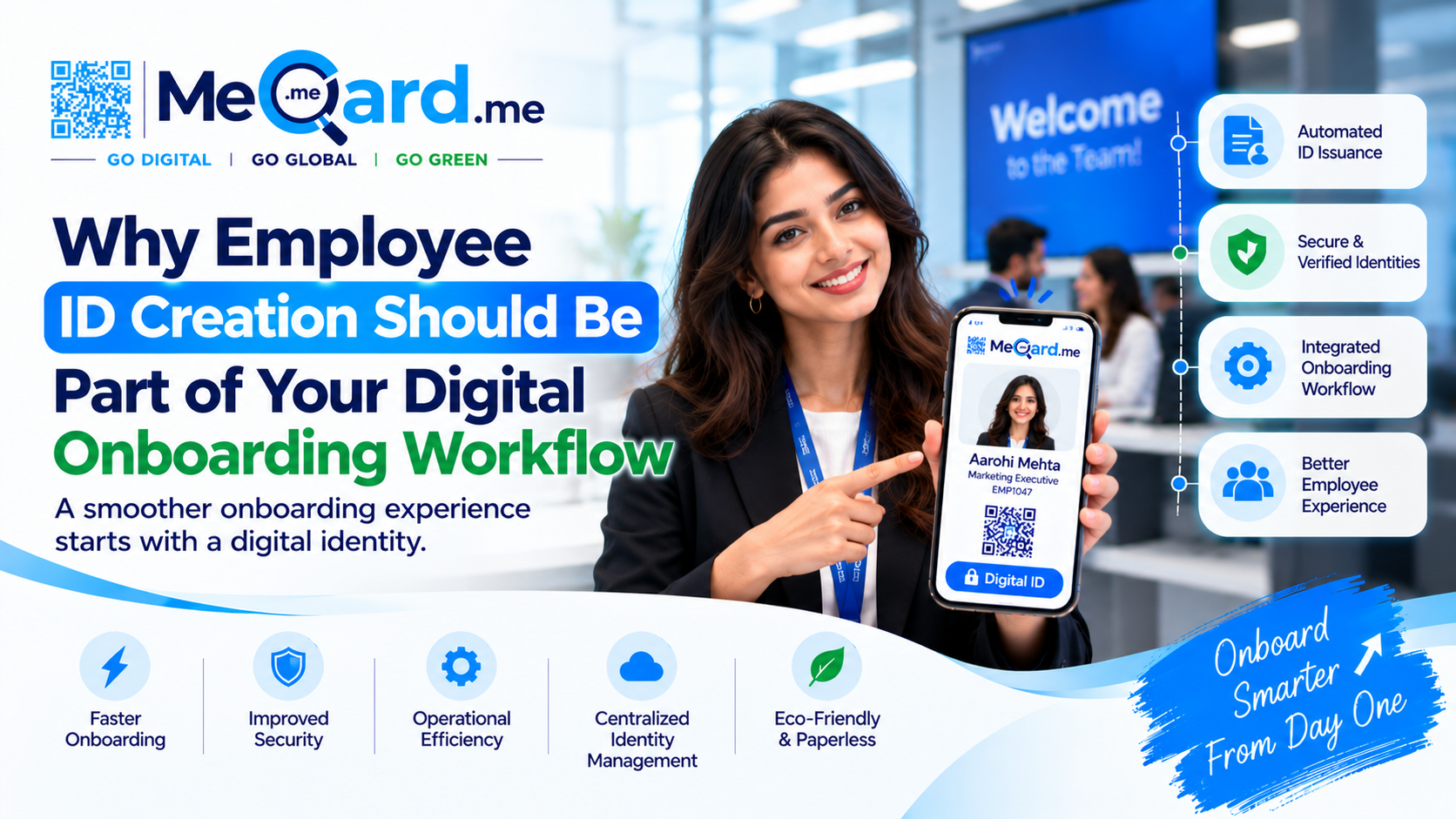
Onboarding Is More Than Completing HR Documents.
When a new employee joins an organization, the onboarding process usually involves several activities: collecting documents, verifying information, setting up payroll, assigning systems access, introducing company policies, and coordinating with HR, IT, and administration.
But there is one important step that organizations sometimes treat as a separate administrative task: employee ID creation.
In many enterprises, employee identification still depends on manual data collection, email approvals, spreadsheet updates, physical card printing, and distribution. Although these processes may work for smaller teams, they can become difficult to coordinate when an organization hires employees across multiple branches, departments, or locations.
The result can be a disconnected onboarding experience. An employee may have completed the required HR documentation but still be waiting for an ID card.
Employee ID creation should be integrated into the digital onboarding workflow rather than handled as an isolated activity. By connecting employee identity issuance with onboarding procedures, enterprises can improve consistency, reduce repetitive administrative work, and establish a more organized process for managing employee identities from the beginning.
Digital employee ID solutions such as MeCard.me can support this transition by enabling centralized digital card management, QR-based identity profiles, and updates to approved employee information.
A digital onboarding workflow is a structured process that uses digital tools to coordinate the activities required when a new employee joins an organization. Depending on the organization, the workflow may include document submission, identity verification, employment approvals, employee record creation, account provisioning, training assignments, and internal communication.
Employee ID creation fits naturally into this process because it depends on information that HR and administration teams already manage, including an employee's name, designation, department, employee number, and organizational affiliation.
Traditional employee ID creation can involve several disconnected steps. Every handoff introduces a potential delay. Integrating digital ID creation into onboarding can help organizations initiate identity issuance as part of an established process. Once the necessary information is verified and approvals are complete, an authorized administrator can issue the employee's digital identity without waiting for physical printing and delivery.
An employee's first day shapes their initial impression of the organization. Integrating employee ID creation into digital onboarding helps HR and administration teams follow a consistent process for preparing employee identities. Digital issuance can make identification available without waiting for a physical card, where the organization's policies permit it.
If ID details are collected separately from official onboarding records, errors can occur. A connected digital workflow can reduce duplicate data entry by using approved employee information as the basis for identity creation. Where the identity platform supports integration with HRMS, organizations may be able to synchronize selected employee details.
Employee identity management should begin when the organization formally establishes an employee's identity. A structured onboarding workflow can define who is authorized to create an ID, which information is permitted, who approves it, and when the identity becomes active.
Employee information changes over time. With digital employee ID management, authorized administrators can update supported profile fields without necessarily issuing a replacement physical card. Integrating identity management into onboarding also creates a foundation for handling later employee changes through the same governance process.
Digital employee IDs can reduce dependence on physical card distribution for identification use cases. A centralized platform can also help authorized administrators maintain consistent identity information across branches, subject to the organization's permissions and implementation.
Onboarding is only the beginning. When employee ID creation is connected to a broader identity management process, organizations can establish clear procedures for identity updates, reviews, and deactivation, such as coordinating with IT access revocation during an employee exit.
MeCard.me offers digital identity solutions that include digital employee ID cards, QR-enabled identity profiles, centralized card administration, and digital profile updates.
1. Why should employee ID creation be part of digital onboarding?
It coordinates identity issuance with employee verification, reduces manual follow-ups, and improves data consistency from the start.
2. How do digital employee ID cards improve the onboarding process?
They reduce dependence on physical printing, support standardized profiles, and simplify updates while enabling QR-based verification.
3. Can employee ID creation be automated through an HRMS?
Yes, when the digital identity platform supports integration with the organization’s HRMS and workflows are properly configured.
4. Do digital employee ID cards replace physical access cards?
Not necessarily. They support identification, while building access may still require separate credentials depending on security needs.
Digital onboarding should not end with document collection. Employee identity issuance is an important part of preparing a new hire to join the organization. Rather than treating employee ID creation as a last-minute administrative task, organizations can make it a planned part of the digital onboarding workflow with MeCard.me.
Modernize your onboarding workflow with MeCard's digital identity solutions.
Explore MeCard.me Digital ID Solutions and discover how your organization can create a more consistent, scalable, and digitally enabled employee onboarding experience.
Phone: +91 77770 01366 / +91 77770 01369
Email: contact@mecard.me